



Dorchester Ave Towers — November 2026 | What South Boston Condo Owners, Renters & Investors Need to Know

Charles King
Charles King is a top-producing real estate agent in Hingham, MA and a trusted Realtor serving the South Shore of Massachusetts, including Hanover, Hu...
Charles King is a top-producing real estate agent in Hingham, MA and a trusted Realtor serving the South Shore of Massachusetts, including Hanover, Hu...
1,945 New Units Proposed on Dorchester Avenue — November 2026 | What South Boston Condo Owners, Renters & Investors Need to Know
Published: November 17, 2026
By: Charles King, Charles King Group | Real Broker MA, LLC
Sources: HYM Investment Group project filing as reported, November 2026 [confirm source publication and link]; Charles King Group agent observations, November 2026
HYM Investment Group and its partners have filed plans for four 200-foot residential towers with 1,945 units on about 6 acres of Dorchester Avenue. The site is currently used for industrial space and self-storage. For South Boston condo owners, renters, and investors, this is one of the biggest proposed additions to housing supply near the neighborhood in years. It also matters across Boston’s core condo markets, including Back Bay, the South End, Beacon Hill, Charlestown, and the Seaport, because new supply on this scale shapes rents, resale competition, and buyer choices citywide. Here’s what’s proposed, how long it will realistically take, and what it means for you.
What Is HYM Proposing on Dorchester Avenue?
According to the filing, the project includes:
- Four residential towers, each about 200 feet tall
- 1,945 residential units on roughly 6 acres
- About 1,432 parking spaces
- A possible off-site affordable housing option instead of building all affordable units on the site
- Review through Boston’s Planned Development Area (PDA) process
A few numbers put the scale in perspective. That’s roughly 324 units per acre, and about 0.74 parking spaces per unit, so not every household gets a space.
What it means: This is a full new neighborhood’s worth of housing on land that currently holds warehouses and storage units. It is a plan, not an approval.
How Long Before These Units Actually Hit the Market?
Years, not months. A Planned Development Area is a special zoning designation that lets the city approve a large project under its own custom rules, instead of the standard zoning for the site. That brings public meetings, community comment, design review, and city approvals. After approval, the developer still has to secure financing and build. Projects of this size are usually built in phases, so the towers would likely open one at a time rather than all at once.
What it means: Nothing about this project changes the South Boston market today. Owners and buyers should treat it as a factor in the next five to ten years, not the next spring market.
Will These Be Condos or Rentals?
The filing details we have describe residential units but do not say how many will be for sale versus for rent. That distinction matters. Most large new towers built in Boston in recent years have been rental buildings. If that holds here, the biggest near-term effect lands on the rental market, not directly on condo resale prices.
What it means: Watch for the unit mix as the project moves through review. Rental-heavy towers compete with investor-owned condos for tenants. For-sale towers compete with resale condos for buyers.
What Does This Mean for South Boston Condo Owners?
For owners, new supply is a mixed picture, and the details of your unit matter more than the headline.
- Parking keeps its value. With fewer than one space per unit planned, deeded or assigned parking stays a meaningful selling point for South Boston condos.
- Older buildings face newer competition. If the towers include amenities like gyms, roof decks, and concierge service, buyers and renters will compare those against older buildings. Units with high condo fees and few amenities feel that comparison first.
- The neighborhood may gain. Turning industrial and storage land into housing usually brings new sidewalks, shops, and restaurants over time. That can make the surrounding area more appealing to future buyers.
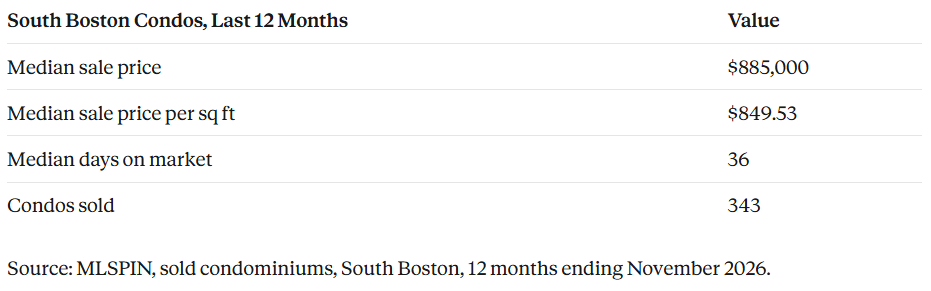
What it means: If you own a South Boston condo with parking, outdoor space, or reasonable fees, your unit has features new tower apartments may not match. If your building has high fees and few amenities, the next few years are a good time to understand where your unit stands.
What Does This Mean for South Boston Renters?
More choice, eventually. When a big rental building opens, it has to fill hundreds of units quickly. That period, called “lease-up,” is when new buildings often offer concessions like a free month of rent or reduced fees to attract tenants. Nearby landlords often respond to stay competitive.
What it means: Renters in and around South Boston may get more options and more negotiating room once these towers open. For renters thinking about buying, the long timeline means today’s purchase decision should rest on today’s market.
What Does This Mean for Boston Condo Investors?
Investors should plan for more competition for tenants, not a sudden drop in value.
- Expect slower rent growth during lease-up. When new buildings open nearby, rent increases on existing units may flatten for a while. Underwrite conservatively.
- Unit features protect rent. Parking, in-unit laundry, outdoor space, and updated kitchens help an older condo hold its rent next to new construction.
- Long holds look different from short ones. Investors who plan to hold for many years may benefit if the area matures into a stronger residential neighborhood. Investors planning a quick sale should factor in the added competition.
What it means: Added supply is a reason to run your numbers carefully, not a reason to panic. Rent and return assumptions are illustrative and should be verified against current MLSPIN and rental data.
How Does This Fit Into Boston’s Bigger Housing Picture?
Boston needs more homes, and large projects like this are one of the main ways supply grows in the city. In Back Bay, Beacon Hill, and the South End, historic buildings and tight lots leave little room for new towers, so new supply there stays limited. Large sites like former industrial land along Dorchester Avenue, plus the Seaport and parts of Charlestown, are where meaningful new supply can actually be built.
What it means: New supply in the city tends to cluster where land is available. That keeps historic neighborhoods scarce while giving buyers and renters more choice in growing areas like South Boston.
What This Means for Sellers
- Sell on what new buildings can’t offer. Parking, private outdoor space, character, lower fees, and an established street are strong selling points. Put them up front in your marketing.
- Know your competition now. Today you’re competing with other resale condos, not towers that don’t exist yet. Price to current South Boston sales.
- Long-term owners have time. If you’re planning to sell within a few years, there’s no rush created by this filing. Watch its progress and plan your timing with real data.
What This Means for Buyers
- Don’t wait for towers that are years away. The filing doesn’t change today’s prices, rates, or inventory.
- Buy features that hold value. Parking and outdoor space stay scarce, especially in a neighborhood adding hundreds of units with less than one space each.
- Look at the whole monthly cost. In Boston, condo fees matter as much as the price. Compare total monthly payments, not just list prices.
- Browse what’s available today. See South Boston condos for sale
November 2026 Outlook
A proposal of this size signals that South Boston will keep changing, with more homes, more residents, and a busier neighborhood over the next decade. For now, the condo market runs on today’s inventory, today’s rates, and the specific features of each unit. If you own, rent, or invest in South Boston and want to know what this means for your property or your plans, I’m happy to walk through it with you.
Own, rent, or invest in South Boston?
I can show you what your condo is worth today and how it compares with what’s coming. Or start by seeing what’s on the market now:
Frequently Asked Questions
What is HYM Investment Group building on Dorchester Avenue in Boston?
HYM Investment Group and partners have filed plans for four 200-foot residential towers with 1,945 units on about 6 acres of Dorchester Avenue, currently used for industrial space and self-storage. The plans include about 1,432 parking spaces and a possible off-site affordable housing option. The project would be reviewed through Boston’s Planned Development Area process. Source: HYM Investment Group project filing as reported, November 2026.
When will the new Dorchester Avenue towers be built?
There is no confirmed construction timeline yet. The project still has to go through Boston’s Planned Development Area review, which includes public meetings and city approvals, before financing and construction can begin. Large projects like this are typically built in phases over several years. Sources: HYM Investment Group project filing as reported, November 2026; Charles King Group agent observations, November 2026.
Will 1,945 new units lower South Boston condo prices?
Not in the near term, because the units are years from completion and today’s prices reflect today’s supply. Over time, the effect depends on whether the towers are mostly rentals or condos. Rentals compete more for tenants than for buyers, while South Boston condos with parking, outdoor space, and reasonable fees keep features new tower units may not match. Source: Charles King Group agent observations, November 2026.
How will the Dorchester Avenue project affect rents in South Boston?
When large rental buildings open, they often offer move-in concessions to fill units quickly, which can slow rent growth in nearby buildings for a period. Renters in and around South Boston may see more choice once the towers open. The project is still in the approval stage, so any rent effect is years away. Source: Charles King Group agent observations, November 2026.
Is buying a South Boston condo still a good investment with new supply coming?
It can be, if you underwrite conservatively. Investors should plan for slower rent growth during the years new buildings lease up, and favor units with parking, in-unit laundry, and outdoor space that compete well with new construction. Long-term holders may also benefit as former industrial land turns into an active residential neighborhood. Source: Charles King Group agent observations, November 2026.
Is it a good time to sell a condo in South Boston or the Seaport?
It depends on your goals and today’s local sales, not on a project that’s still under review. Sellers who list now compete with existing resale condos, not new towers. Highlighting parking, outdoor space, and condo fees against new construction helps a unit stand out now and in the future. Source: Charles King Group agent observations, November 2026.
Does new construction in South Boston affect condo values in Back Bay, Beacon Hill, and the South End?
Only indirectly. Historic neighborhoods like Back Bay, Beacon Hill, and the South End have little room for new towers, so their supply stays limited even as areas with available land add units. Buyers who want historic character and walkability still have few options there. Source: Charles King Group agent observations, November 2026.